


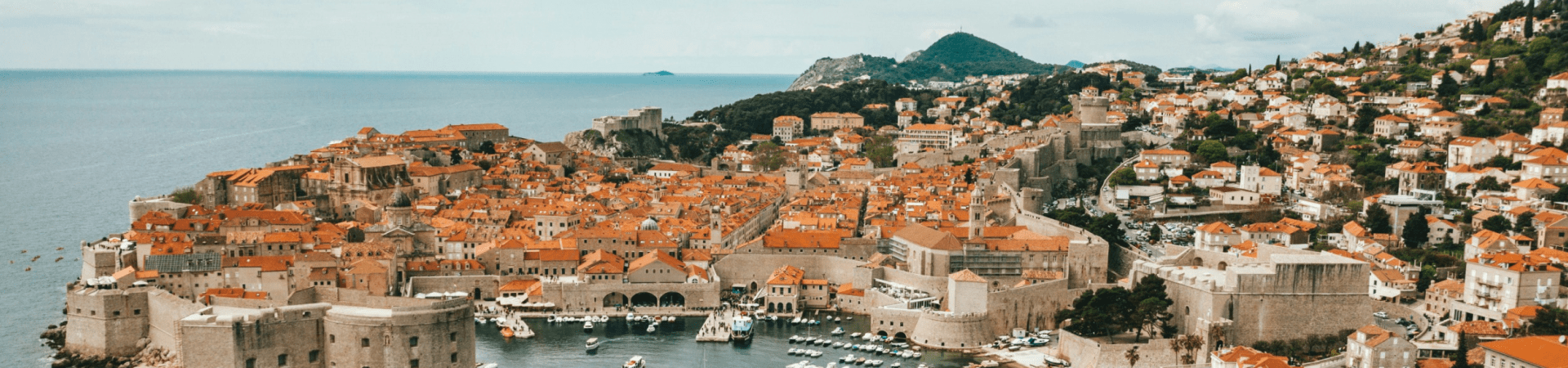
Croatia
- About Croatia:
- Croatia is a country located in Southeast Europe on the Adriatic Sea. It shares borders with Slovenia to the northwest, Hungary to the northeast, Serbia to the east, Bosnia and Herzegovina to the southeast, and Montenegro to the southeast.
- The capital and largest city is Zagreb.
- Croatia has a diverse landscape that includes the Adriatic coast, islands, and inland regions with mountains and lakes.
- The country has a rich historical and cultural heritage, with influences from Roman, Venetian, Ottoman, and Austro-Hungarian periods.
- Religion & Culture:
- The majority of the population in Croatia is Roman Catholic, and the Catholic Church has played a significant role in the country’s history and culture.
- Croatian culture is influenced by a mix of Central European, Mediterranean, and Balkan traditions.
- Traditional music, dance, and festivals are integral to Croatian culture, with diverse regional variations.
- The coastal regions have a Mediterranean lifestyle, while the inland areas may have more Central European characteristics.
- Education & Work:
- Croatia has a developing education system, with several universities offering a range of academic programs.
- The job market in Croatia varies by region and sector. Tourism is a significant industry, particularly along the Adriatic coast. Other sectors include manufacturing, services, and agriculture.
- Proficiency in the Croatian language is often essential for many job opportunities, especially in sectors with direct interaction with local clients or businesses.
- The cost of living in Croatia is generally lower compared to many Western European countries.
- Criteria for Applying for a Job Visa:
- Croatia is a member of the European Union (EU), and as such, citizens of EU/EEA countries do not need a visa to work in Croatia.
- Non-EU/EEA nationals typically need a work visa to work legally in Croatia.
- The criteria for applying for a job visa may include having a job offer from a Croatian employer, meeting specific qualifications, and demonstrating that the job cannot be filled by a Croatian or EU/EEA worker.
- Language proficiency may be required, depending on the nature of the job.
- Applicants may need to provide proof of accommodation, health insurance, and financial means to support themselves during their stay.
- It’s essential to check the latest information from the Croatian embassy or consulate to ensure compliance with current immigration regulations.
As immigration policies can change, it’s crucial to verify the most up-to-date information from official sources before planning any move to Croatia.


